Bose QuietComfort Ultra Headphones Make Great Gifts
Premium Noise Cancelling Headphones That Turn Noisy Commutes, Travel And Hybrid Workdays Into Quieter, More Focused Moments
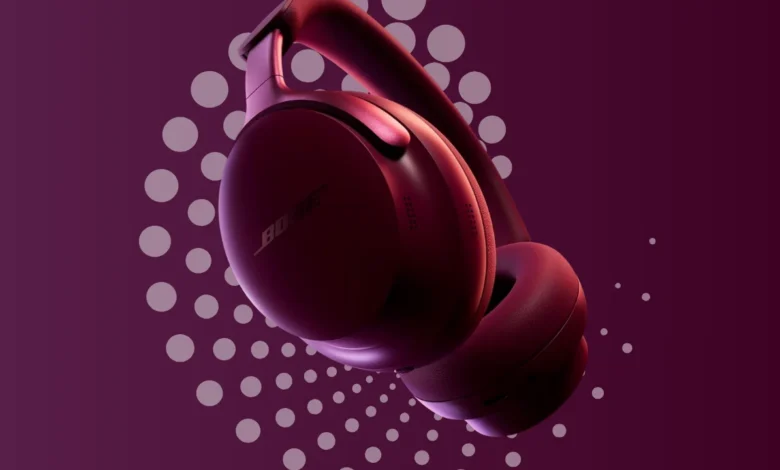
Bose QuietComfort Ultra headphones have finally dropped into a price range that makes peace, focus, and better sleep feel like a realistic daily upgrade, not a luxury you just daydream about. If you’re weighing them against cheaper Bose models or rivals in 2025, this is the first time the value equation really shifts in favour of going Ultra.
On a crowded bus, in a shared flat, or at a noisy office hot desk, constant background noise is no longer a minor annoyance—it’s the thing that makes your commute and flights exhausting, your workday draining, and your evenings less restorative than they should be. Premium noise-cancelling headphones have become a kind of everyday armour, and the gap between the “almost good enough” pairs and the stand-out models shows up in how tired you feel at the end of the day.
Recent sales have pulled Bose QuietComfort Ultra headphones down towards mid-range pricing, while they still keep flagship features like Immersion Mode noise cancellation, spatial audio with head tracking, and CustomTune personalized sound. At the same time, competing options like Sony WH‑1000XM5 and Apple AirPods Max still tend to sit higher on the price ladder, especially in Canada.
But, are these over-ear Bluetooth headphones worth buying or gifting right now as a Bose QuietComfort gift, and when does it still make sense to stick with older QuietComfort models or competitors?
Why Quiet, Premium Headphones?
By 2025, noisy spaces have become the default, not the exception. You probably take calls from cafés, ride transit with people watching videos out loud, and share your home with partners, kids, or roommates who all have their own soundscapes.
Bose QuietComfort Ultra headphones sit in that sweet spot where comfort, Active noise cancelling (ANC), and audio tech are aligned with how people actually live. You get strong noise cancelling that independent testing has ranked at or near the top for blocking both low rumbles (train tracks, plane engines) and mid-range chatter (open offices, busy cafés).
That means you can turn a subway ride into quiet reading time, or soften the edge of a hectic open-plan workday without having to blast your volume.
Who These Bose Headphones Are (and Aren’t) For
If you spend a lot of time commuting, flying, or working in shared spaces, these are built for you. The soft cushions, even headband pressure, and relatively light weight make them easier to wear for full workdays, red-eye flights, or long focus sessions without the hot-spot pain that cheaper pairs can cause.
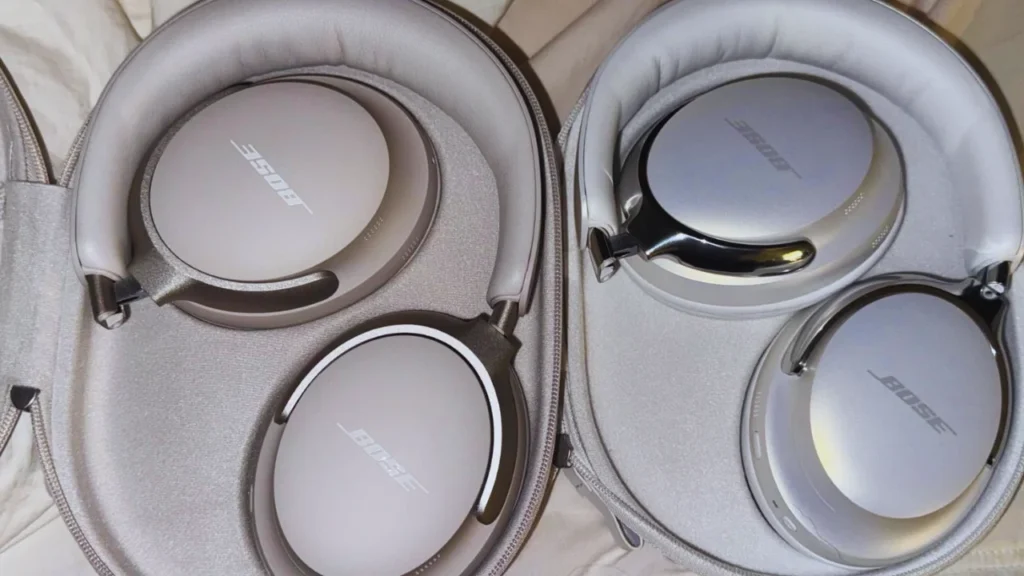
They also shine if you’re a hybrid worker who jumps between calls, playlists, and podcasts all day—multipoint Bluetooth lets you stay paired to your laptop and phone at the same time.
They’re also a strong Bose QuietComfort gift if you’re buying for someone who values quiet more than flashy styling.
You’re not gifting a gimmick; you’re gifting a way to turn chaos down and mental bandwidth up.
The combination of CustomTune personalized sound and all‑day battery life (up to about 24 hours in standard ANC modes, or roughly 18 hours with Immersion/immersive audio) means these can be that one “main” pair of travel headphones for years.
There are times they won’t be the best fit. If your budget is tight and you mainly want reliable ANC without the extra immersion tricks, older models like the Bose QuietComfort 45 can still make sense—especially when heavily discounted—though they lack spatial audio with head tracking and CustomTune.
If you dislike the bulk of over-ears entirely or want something truly pocketable, you might be happier with earbuds instead of over-ear Bluetooth headphones, even if you sacrifice some comfort and isolation on long days.
Best Ways to Use Bose QuietComfort Ultra Headphones
Turn Commutes Into Quieter, Calmer Rides
On buses and trains, the move is simple.
Wear them in Quiet or Immersion Mode, depending on how loud things get.
Quiet gives you strong ANC without the more dramatic spatial processing, while Immersion adds Bose’s take on 3D sound plus maximum cancellation. You’ll notice the difference the first time you step onto a noisy bus and realize you can actually hear your audiobook at a comfortable volume.
If you walk city streets or cycle, you’ll want Aware mode instead. This uses the external mics to blend outside sound back in so you can hear traffic and announcements while still taming the worst of the roar.
That mix of modes is why these genuinely qualify as some of the best headphones for commuting rather than just “good for flights.”
Make Hybrid Work Calls Less Draining
For hybrid work and remote workers, the Ultra’s mic system and comfort matter as much as music.
The mics are tuned to keep your voice clear in the middle of keyboard taps, dishwashing, or kids in the next room, and the ANC helps you focus on the people speaking instead of every background noise in your flat.
If you use them as your main work headset, CustomTune personalized sound lets you shape the audio so voices sit where you want them—brighter if you like clarity, warmer if you’re sensitive to treble.
Over a day of back-to-back calls, that reduces listening fatigue more than you’d think, especially if you’re upgrading from low-cost over-ears that sound rough or clamp unevenly.
Travel Lighter Without Losing Your Bubble of Quiet
For travel, these are the kind of travel headphones you can leave on from gate to landing. The folding design and included case slip easily into a backpack, and the all‑day battery life means you’re unlikely to run flat unless you forget to charge for days.
If that happens, a quick top-up via USB‑C gives you a couple of hours of playback from a short charge window.
Immersion Mode is your friend on planes, while Quiet Mode works well in terminals and hotel rooms. If you’re choosing a gift for someone who’s always on planes, this is where the Bose QuietComfort Ultra headphones leap ahead of cheaper sets—they’re not just blocking noise, they’re preserving energy on every segment.
If You’re Buying a Gift for a Frequent Flyer
As a holiday tech gift 2025 pick, these are ideal for someone who travels, works in a hybrid role, or lives in a noisy building.
You’re giving them a single tool they can use for Netflix in bed, calls from a busy coworking space, and naps on a red-eye.
Compared with gifting a standard Bose QuietComfort 45, you’re effectively future-proofing them with features like spatial audio with head tracking and CustomTune personalized sound that the older model does not offer.
For a picky tech user who notices details, those extra tricks—plus the stronger overall ANC—make it much less likely the gift ends up unused in a drawer.
Reasons to Buy Now (and When to Hold Off)
There’s real urgency here, but it’s practical rather than manufactured. The current deals are significantly below their original prices and, in some cases, close to, or even below, standard QuietComfort promos.
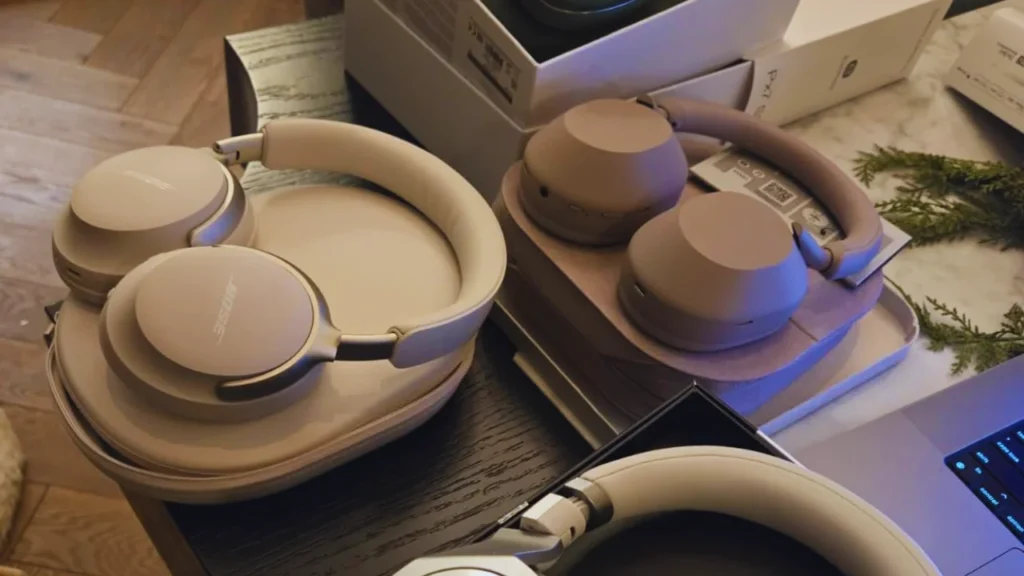
Given how Bose and other brands usually behave, those prices can spike back up after big sales periods.
Buying now makes the most sense if:
- You plan to use one “main” pair daily for commuting, hybrid work, and travel over the next few years.
- You’re already drowning in background noise, and mid-range headphones have not fixed the problem.
- You need a reliable, premium Bose QuietComfort gift that won’t feel outdated in a year.
Waiting Could Mean More Noise in Your Day
At this point, you’re not just deciding whether to buy a pair of Bose QuietComfort Ultra headphones—you’re deciding how many more commutes, workdays, and late nights you’re willing to spend battling background noise with gear that clearly isn’t keeping up.
You could wait for the next model or the next sale and maybe save a bit more, but that usually comes at the cost of months of extra fatigue, irritation, and lost focus in the meantime.
If you can see the value in reclaiming some peace and focus each day, Bose QuietComfort Ultra headphones are worth a serious look at this price.

One Comment